



IRA precious metals are physical gold, silver, platinum, and palladium bullion products held inside a self-directed individual retirement account (SDIRA) — providing the tax advantages of a conventional IRA alongside direct ownership of tangible assets with no counterparty risk. Under IRC §408(m)(3), the IRS permits four precious metals in retirement accounts, provided each meets specific purity thresholds, is produced by an approved mint or refiner, and is stored at an IRS-approved depository. This guide covers every IRS rule for IRA precious metals, the full catalog of eligible products for each metal, the setup process, costs, and the top companies to work with in 2026.
What Are IRA Precious Metals?
IRA precious metals are physical bullion products — coins, bars, and rounds — that meet IRS purity and provenance requirements under IRC §408(m)(3), making them legally eligible to be held inside a self-directed retirement account. Unlike the stocks, bonds, and mutual funds available in a conventional IRA, IRA precious metals are tangible assets stored at an independent, IRS-approved depository under the administrative control of a qualified custodian.
The IRS recognizes four precious metals for IRA inclusion: gold, silver, platinum, and palladium. Each metal has its own fineness (purity) threshold, approved source list, and eligible product catalog. A single self-directed IRA can hold all four metals simultaneously, allowing investors to build a diversified precious metals allocation within one tax-advantaged account.
IRA precious metals accounts combine two powerful investment characteristics: the tax efficiency of a retirement account (deferred or tax-free growth, contribution deductibility) and the tangible asset characteristics of physical bullion (no counterparty risk, inflation hedge, portfolio diversification from stocks and bonds). This combination makes the precious metals IRA a unique tool in a comprehensive retirement strategy.
IRS Rules for IRA Precious Metals
The IRS sets strict rules for which precious metals qualify for IRA inclusion and how they must be handled. Violating these rules constitutes a prohibited transaction under IRC §4975, triggering full taxation of the IRA balance in the year of the violation.
Purity Requirements by Metal
| Metal | Minimum Fineness | Exception | IRS Code |
|---|---|---|---|
| Gold | .995 (99.5% pure) | American Gold Eagle — .9167 (explicitly named) | IRC §408(m)(3)(A) |
| Silver | .999 (99.9% pure) | None | IRC §408(m)(3)(A) |
| Platinum | .9995 (99.95% pure) | None | IRC §408(m)(3)(B) |
| Palladium | .9995 (99.95% pure) | None | IRC §408(m)(3)(B) |
Source Requirements
IRA precious metals must be produced by: (1) a national government mint (US Mint, Royal Canadian Mint, Perth Mint, Austrian Mint, Royal Mint), or (2) a NYMEX/COMEX-approved or LBMA-accredited refiner (PAMP Suisse, Valcambi, Johnson Matthey, Sunshine Minting). Products from non-approved private mints or jewelry manufacturers do not qualify.
Storage and Custody Requirements
All IRA precious metals must be held at an IRS-approved depository under the administrative control of a qualified IRA custodian. Home storage, bank safe deposit boxes, and storage with the precious metals dealer are all prohibited. The only compliant storage arrangement involves the three-party structure: account holder → custodian → IRS-approved depository.
IRA-Eligible Gold Products
Gold is the most popular IRA precious metals holding and the most liquid market. The following products are confirmed IRS-eligible for 2026.
IRA-Eligible Gold Coins
- American Gold Eagle (1 oz, 1/2 oz, 1/4 oz, 1/10 oz) — .9167 fine, named in IRC §408(m)(3)(A)(i). Bullion and proof both qualify.
- American Gold Buffalo (1 oz, .9999 fine) — US Mint's purest gold coin.
- Canadian Gold Maple Leaf (1 oz, .9999 fine) — Royal Canadian Mint.
- Austrian Gold Philharmonic (1 oz, .9999 fine) — Austrian Mint.
- Australian Gold Kangaroo (1 oz, .9999 fine) — Perth Mint.
- British Gold Britannia (1 oz, .9999 fine) — Royal Mint.
IRA-Eligible Gold Bars
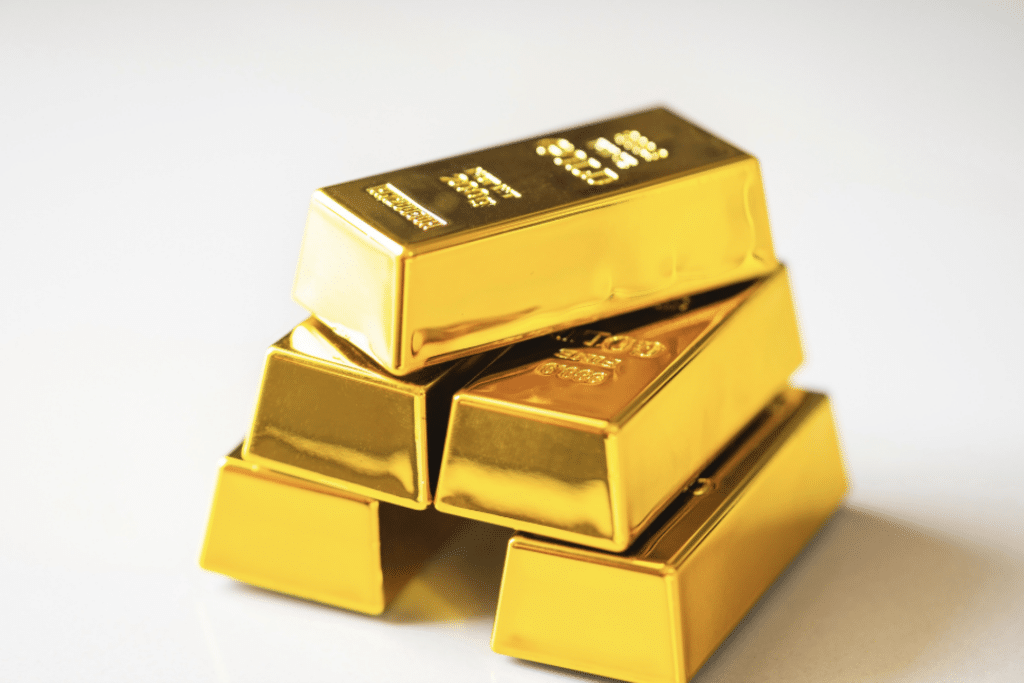
Gold bars must be .995 fine and produced by a COMEX or LBMA-approved refiner. Major approved refiners: PAMP Suisse, Valcambi, Argor-Heraeus, Asahi Refining, Sunshine Minting, Perth Mint. Sizes: 1 oz, 10 oz, kilo (32.15 oz). All bars must carry an assay certificate.
IRA-Eligible Silver Products
Silver is the second most common IRA precious metals holding, offering higher volatility and lower per-ounce cost than gold. IRS minimum fineness for IRA silver is .999.
IRA-Eligible Silver Coins
- American Silver Eagle (1 oz, .999 fine) — US Mint, named in IRC §408(m)(3)(A)(i).
- Canadian Silver Maple Leaf (1 oz, .9999 fine) — Royal Canadian Mint.
- Australian Silver Kangaroo (1 oz, .9999 fine) — Perth Mint.
- Austrian Silver Philharmonic (1 oz, .999 fine) — Austrian Mint.
- British Silver Britannia (1 oz, .999 fine) — Royal Mint.
IRA-Eligible Silver Bars
Silver bars must be .999 fine and produced by a NYMEX/COMEX-approved or LBMA-accredited refiner. Common sizes: 1 oz, 5 oz, 10 oz, 100 oz. Approved refiners include Johnson Matthey, PAMP Suisse, Sunshine Minting, Valcambi, and Asahi Refining.
IRA-Eligible Platinum and Palladium Products
Platinum and palladium are the least commonly held IRA precious metals but offer significant portfolio diversification and exposure to industrial/automotive demand trends. Both require .9995 fineness minimum under IRC §408(m)(3)(B).
IRA-Eligible Platinum Products
- American Platinum Eagle (1 oz, .9995 fine) — US Mint.
- Canadian Platinum Maple Leaf (1 oz, .9995 fine) — Royal Canadian Mint.
- Australian Platinum Kangaroo (1 oz, .9995 fine) — Perth Mint.
- PAMP Suisse Platinum Bars (1 oz, .9995 fine) — LBMA-accredited refiner.
IRA-Eligible Palladium Products
- American Palladium Eagle (1 oz, .9995 fine) — US Mint.
- Canadian Palladium Maple Leaf (1 oz, .9995 fine) — Royal Canadian Mint.
- PAMP Suisse Palladium Bars (1 oz, .9995 fine) — LBMA-accredited refiner.
Precious Metals IRA vs Regular IRA
Understanding how a precious metals IRA differs from a conventional IRA helps investors determine whether and how much of their retirement savings to allocate to physical metals.
| Factor | Precious Metals IRA (SDIRA) | Regular IRA (Brokerage) |
|---|---|---|
| Eligible assets | Physical gold, silver, platinum, palladium | Stocks, bonds, ETFs, mutual funds |
| Custodian type | Specialized SDIRA custodian required | Standard brokerage (Fidelity, Vanguard) |
| Annual costs | $175–$400 (custodian + depository) | $0–$50 (most brokerages fee-free) |
| Returns | Metal price appreciation only — no yield | Dividends, interest, capital gains |
| Counterparty risk | None — physical asset in insured storage | High — paper claims on financial institutions |
| Inflation protection | Strong — tangible asset with intrinsic value | Variable — depends on asset class |
| Best allocation | 5–15% of retirement portfolio | 85–95% of retirement portfolio |
How to Open a Precious Metals IRA: Step-by-Step
- Choose an IRA precious metals company and SDIRA custodian (Days 1–5). Select a company based on fee transparency, BBB rating, metal catalog, and specialist quality. The company works with an approved custodian — your SDIRA application is processed in 3–5 business days.
- Fund the account (Days 5–17). Options: direct transfer from existing IRA (5–10 business days), 401(k) rollover (7–14 business days), or annual contribution ($7,000/$8,000 limit). Direct transfers are tax-free and have no frequency or dollar limit.
- Select IRS-eligible precious metals products (Day 17–20). Work with your specialist to choose compliant products from the company's catalog. Your specialist confirms IRS eligibility for each product before purchase.
- Purchase and depository delivery (Days 20–25). Your custodian executes the purchase order. The company ships metals directly to the IRS-approved depository. You receive documentation confirming product type, quantity, weight, serial numbers, and storage method.
IRA Precious Metals Costs and Fees
| Fee Type | Typical Range | Notes |
|---|---|---|
| Account setup (one-time) | $50–$100 | Often waived for $25,000+ deposits |
| Annual custodian fee | $75–$150/year | Flat or percentage-based; flat preferred |
| Segregated storage | $100–$150/year | Per metal type; scales with number of metals |
| Allocated storage | $75–$100/year | Pooled by metal type |
| Wire transfer | $25–$35 per transaction | Per funding event |
| Gold premium over spot | $30–$80/oz | For coins; lower for bars |
| Silver premium over spot | $2–$8/oz | Higher for coins, lower for bars |
| Platinum/Palladium premium | $30–$100/oz | Higher volatility in spreads |
Storage for IRA Precious Metals
All IRA precious metals must be stored at an IRS-approved depository. The three major depositories used by top IRA precious metals companies in 2026:
- Delaware Depository (Wilmington, DE) — Most widely used; Class III vault; Lloyd's of London insurance; annual independent audits. Accepts all four IRA-eligible metals.
- Brinks Global Services — Multiple US locations; global armored transport; full insurance; preferred for larger multi-metal accounts.
- International Depository Services (Delaware & Texas) — Used by Noble Gold; geographically diversified across two states; competitive pricing.
Tax Advantages of IRA Precious Metals
IRA precious metals offer the same tax advantages as conventional IRAs — with one important additional benefit: the 28% collectibles capital gains tax that applies to precious metals held outside an IRA is completely eliminated inside the account.
In a traditional precious metals IRA, eligible contributions are potentially tax-deductible, and all gains — including metal price appreciation — accumulate tax-deferred until distribution. In a Roth precious metals IRA, post-tax contributions grow tax-free, and all qualified withdrawals — including every dollar of metal appreciation — are permanently tax-free. For investors who anticipate significant gold or silver price appreciation over their retirement horizon, the Roth structure provides extraordinary after-tax value.

Gold, silver, platinum, palladium — complete IRA precious metals catalog with named education director and full fee transparency.
Visit Augusta →Ineligible IRA Precious Metals — What to Avoid
Not all precious metals products qualify for IRA inclusion. Purchasing ineligible products inside an IRA triggers a prohibited transaction under IRC §4975, which treats the purchase amount as a taxable distribution.
- Junk silver — Pre-1965 US coins with .900 fineness. Below .999 minimum.
- Sterling silver — .925 fine. Below .999 minimum. Used in jewelry and flatware.
- Numismatic/collectible coins — Morgan dollars, Peace dollars, Saint-Gaudens, all graded (PCGS/NGC) coins. Treated as collectibles under IRC §408(m).
- Standard gold jewelry — 10k, 14k, 18k, 22k gold. Below .995 minimum (and not a qualifying product form).
- Gold/silver ETF shares — Paper claims, not physical metal. Cannot be held in precious metals IRA.
- Non-COMEX-approved private mint bars — Must come from an approved refiner list.
- Gold/silver certificates — Paper instruments representing unallocated pool accounts. Not physical metal.
IRS-Approved Depositories for IRA Precious Metals
The IRS requires that all precious metals held in a retirement account be stored at a facility meeting the requirements of IRC §408(a): adequate insurance, independent annual audits, physical security infrastructure, and IRS-approved custodial oversight. The primary IRS-approved depositories for IRA precious metals in 2026 are: Delaware Depository (Wilmington, DE), Brinks Global Services (multiple US locations), CNT Depository (Bridgewater, MA), International Depository Services (Delaware and Texas), and Equity Institutional (Scottsdale, AZ). All carry comprehensive Lloyd's of London or equivalent insurance coverage and undergo annual independent audits by certified public accountants.
Gold vs Silver vs Platinum vs Palladium IRA: Comparison
| Metal | IRS Fineness | Spot Price (Apr 2026) | Volatility | Industrial Demand | Best For |
|---|---|---|---|---|---|
| Gold | .995 | ~$3,200/oz | Lowest | ~8% of supply | Stability, preservation |
| Silver | .999 | ~$34/oz | 2-3x gold | ~55% (solar, electronics) | Growth leverage, low entry |
| Platinum | .9995 | ~$960/oz | High | ~40% (automotive, jewelry) | Diversification, automotive exposure |
| Palladium | .9995 | ~$980/oz | Highest | ~85% (catalytic converters) | Automotive/industrial demand play |
IRA Precious Metals Compliance Checklist
- ☐ Metal meets IRS fineness minimum (gold .995, silver .999, platinum/palladium .9995)
- ☐ Product produced by national government mint or COMEX/LBMA-approved refiner
- ☐ Purchase executed through SDIRA custodian — not directly from dealer to investor
- ☐ Gold/silver/platinum/palladium shipped directly from dealer to IRS-approved depository
- ☐ Storage confirmation received: product type, serial numbers, weight, storage method
- ☐ Custodian filing IRS Form 5498 by May 31 of following year
- ☐ No home storage, bank safe deposit box, or dealer storage of IRA metals
- ☐ No numismatic coins, junk silver, or sterling silver inside the IRA
IRA Precious Metals Explained (Video)
Video: Overview of IRA precious metals rules — gold, silver, platinum, palladium eligibility, storage, and setup process.
Recommended IRA Precious Metals Allocation
Gold
Stability & preservation
Silver
Growth & industrial
Platinum
Automotive demand
Palladium
Industrial exposure
CFP® recommended allocation for a fully diversified IRA precious metals portfolio.
Official Resources & Regulatory References
IRS Publication 590-B
Official IRS rules for IRA distributions, rollovers, and precious metals eligibility
IRS Publication 590-A
IRA contribution limits, deductibility, and rollover rules
CFTC Fraud Advisories
Commodity Futures Trading Commission — precious metals fraud warnings
LBMA Good Delivery List
London Bullion Market Association — accredited precious metals refiners